Blog 9 - Conversational or Chatbots
- rijly A
- Dec 8, 2021
- 2 min read

Updated: Dec 11, 2021
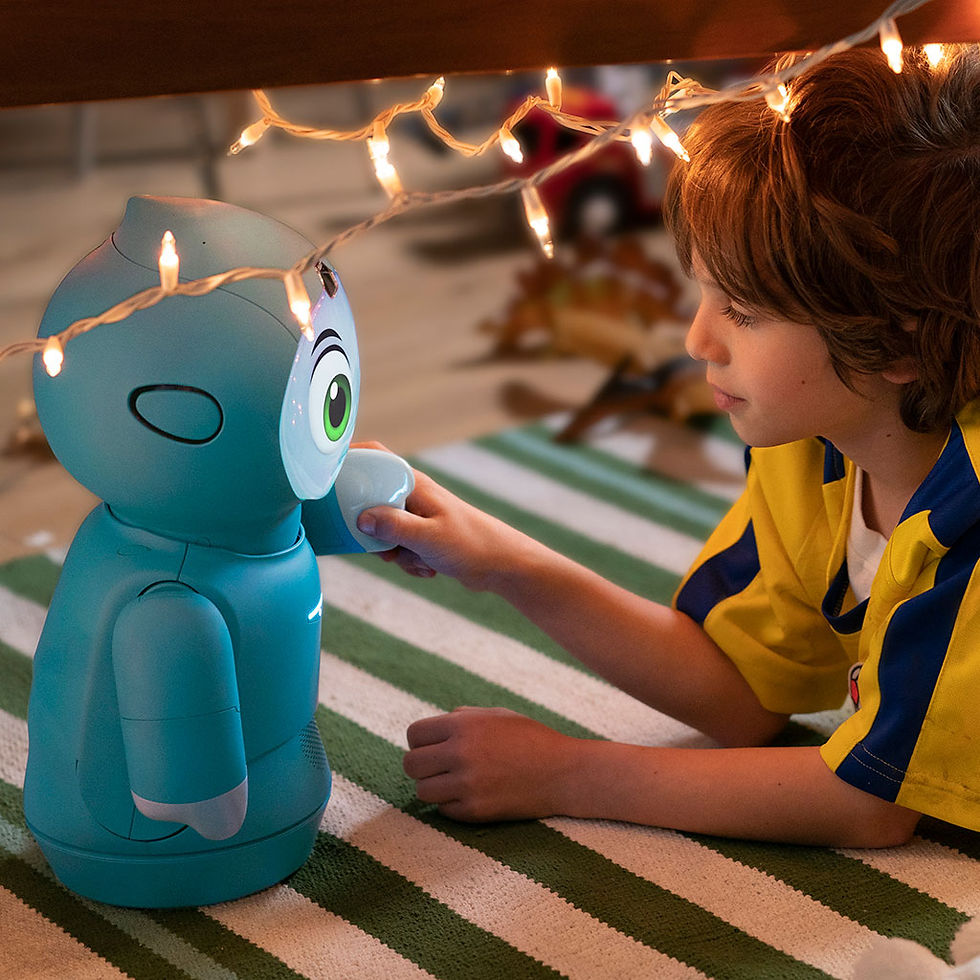
In the beginning, chatbots could only answer the most basic questions asked by users. However, the development of artificial intelligence and improvements in chatbot building software now enables them to answer more complex questions and provide a high-quality customer experience.
In addition to answering frequently asked questions, chatbots can now automate lead generation, sell products, collect feedback, and more.
While technology advances, chatbots are gradually moving towards their next-generation paradigm-virtual life. Its core lies in simulating the main characteristics of life, interacting with multi-form and multi-modality.
Imagine if you are a fan of Beyoncé, if there is a chatbot with the shape and voice of Beyoncé, and can interact, it is an exciting thing. At the same time, with different personalities and personal settings, the interactive experience of virtual life will become more affluent.
Multi-modal interaction capabilities will further enhance the cognition and expressiveness of virtual life to users. The virtual life can be heard and seen through the microphone array and the camera to perceive the user's intentions comprehensively.
At the same time, using the knowledge graph, virtual life can communicate with people and the surrounding environment in "real and natural," including planning, reasoning, association, emotion, and learning abilities, extreme usability, and interactivity.
Furthermore, through art design, motion capture, holographic projection, and other technologies, virtual life can show different images in different devices and different scenes. In addition to natural language communication, it can also perform more diverse manifestations such as dancing and singing.
Here is an example of it, Virtual Life Product-Amber·Xuyan.
https://www.gowild.cn/home/product/holoera.html
The scientific development will present future chatbots and virtual life to us in a better form and sense of experience on this new track. There is still a lot of space for improvement in this vast market, and there are still many challenges.


These are some great points and food for thought. In terms of the uncanny valley we learned about in class, I wonder if there is a “line” that can be crossed with bots and virtual life — is there such a thing as too realistic? Thanks for this article!